
by Philippa Clark, Director of Business Development, One Nucleus
There was a real sense of anticipation in the air as delegates arrived at Chesterford Research Park for BioBeat26. Perhaps it was the excitement of seeing BioBeat return. Perhaps it was the opportunity to reconnect with familiar faces and meet new ones. Perhaps it was the significance of the occasion itself, the beginning of a new chapter as BioBeat became part of the One Nucleus conference portfolio.
Whatever the reason, from the speaker networking lunch through to the final conversations over drinks, the energy never faded.
For One Nucleus, it was a real privilege to bring together the longstanding BioBeat community alongside our own network of innovators, investors, entrepreneurs, and industry leaders. What followed was a day of curiosity, openness, and a shared commitment to advancing life sciences through collaboration.
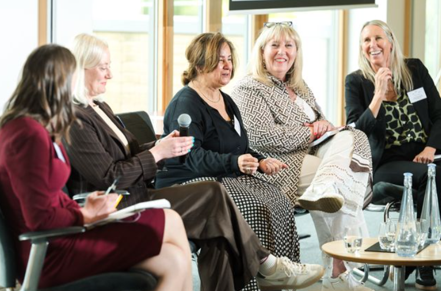
The 2026 Biotech Playbook: Navigating a Changing Landscape
Our first panel explored the realities of building and financing biotech companies in today’s environment. While market conditions remain challenging, the discussion highlighted a sector that is adapting rather than retreating, and several themes emerged clearly.
Companies are increasingly being encouraged to build with future acquisition opportunities in mind from the earliest stages. Investors continue to favour asset-focused businesses over broader platform models, placing greater emphasis on clear development pathways and value inflection points.
Operational discipline was another recurring theme. Lean organisations with a sharp focus on capital efficiency are becoming the norm rather than the exception.
Artificial intelligence also featured prominently, not simply as a scientific tool but as an increasingly important layer of business infrastructure, supporting everything from decision-making to operational effectiveness.
Funding strategies are evolving too. While venture capital remains important, companies are increasingly combining traditional investment with grants, NHS Innovation Hubs, angel syndicates, corporate venture capital, family offices, and other non-dilutive funding sources.
The discussion also reinforced that biotech remains a global industry, but not a uniform one. Significant differences remain between UK and US markets in valuation expectations, financing norms, equity ownership structures and investor appetite for risk. Meanwhile, China continues to attract interest, albeit with growing complexity.
Across therapeutic areas, attention remains focused on metabolic disease, AI-enabled healthcare, diagnostics, oral therapeutics, antibody-drug conjugates (ADCs), cell therapy, immunology and neurology.
Perspectives in Rare Disease Innovation: A Powerful Reminder of Why We Do What We Do
If one session captured the emotional heart of BioBeat26, it was our panel on rare disease innovation. The conversation delivered a powerful, and at times, deeply moving reminder that behind every technology platform, funding round and clinical milestone are patients and families navigating extraordinarily difficult circumstances.
Several key challenges emerged. Diagnosis remains one of the greatest barriers facing rare disease communities. Without diagnosis, patients often struggle to access support networks, clinical expertise, and the broader ecosystem that can ultimately drive progress.
The panel also highlighted the growing importance of high-quality data. Natural history data is becoming increasingly valuable for endpoint development, while well-structured patient data creates opportunities to identify meaningful patterns across conditions and improve clinical development strategies.
Importantly, patient communities are no longer simply participants in research. They are becoming essential partners in shaping endpoints, informing development pathways, and ensuring innovations address real-world needs.
Cross-disease collaboration was identified as another significant opportunity, allowing organisations to build more scalable approaches and learn from shared experiences across multiple conditions.
Yet despite growing enthusiasm for rare disease innovation, a commercial reality remains: investors continue to prioritise market opportunity and scalability. Bridging the gap between unmet patient need and investable opportunities remains one of the sector’s most important challenges.
The overwhelming conclusion was clear; future progress will depend on deeper collaboration, stronger patient engagement, and continued investment in the data foundations that enable innovation.
Beyond the Lab: The Medici Effect in Modern Biotech
Our closing fireside discussion explored a theme that resonated strongly throughout the day: innovation rarely happens in isolation.
The concept of the “Medici Effect”, where breakthrough ideas emerge at the intersection of disciplines, industries and perspectives, provided the perfect framework for a conversation about modern biotech leadership.
Several messages stood out. Firstly, organisations must keep end users firmly at the centre of decision-making. Whether developing therapies, diagnostics or technologies, success ultimately depends on delivering meaningful value to patients, clinicians, and healthcare systems.
Secondly, engagement with government and policymakers cannot be treated as an afterthought. Strategic engagement is becoming increasingly important as innovation pathways become more interconnected with healthcare delivery, regulation, and economic policy.
Data and AI capability were once again highlighted as essential skills for future organisations, while trust emerged as a critical ingredient for long-term success. That trust is often built through peer-to-peer relationships, shared experiences, and genuine collaboration.
Perhaps most importantly, adaptability continues to separate successful organisations from the rest. In an environment defined by rapid change, the ability to evolve may be one of the most valuable capabilities of all.
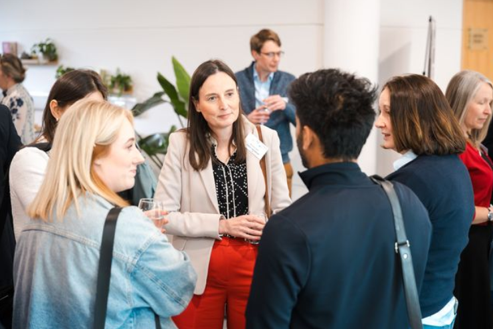
The panels were outstanding, but the moments that really stood out came from the networking in between, the conversations over coffee and cake, the unexpected introductions, the sense that people weren’t just attending an event but participating in a community.
BioBeat has always thrived on that collective spirit, and this year it felt more important than ever. In a sector still working through uncertainty, the willingness to connect, share, and show up for one another was a powerful reminder of what progress really looks like.
Thank You
A huge thank you to our speakers for sharing their expertise, insights and experiences so generously throughout the day.
We are also incredibly grateful to all of our event sponsors including Covington, Appleyard Lees and Collaborative Drug Discovery. Their support went far beyond sponsorship alone. They played an important role in helping shape the programme, contributing ideas, perspectives and guidance that helped ensure BioBeat26 delivered meaningful value for attendees. Their commitment to supporting collaboration and innovation across the life sciences community was evident throughout, and we greatly appreciate their partnership.
Thank you to everyone who attended. Your curiosity, engagement and willingness to contribute is what makes BioBeat so special.
It's important to recognise the incredible contribution of Miranda Weston-Smith, whose vision and leadership built BioBeat into the respected platform it is today. BioBeat has always been far more than an event; it has been a place where people come together to share ideas, challenge assumptions and support one another. One Nucleus was honoured to continue that legacy.
Looking Ahead to BioBeat27
As the final conversations came to a close and delegates began making their way home, one thing felt clear: this is only the beginning of BioBeat’s next chapter. The challenges facing life sciences remain significant, but so too are the opportunities. If BioBeat26 demonstrated anything, it is that progress happens when people come together, share perspectives and remain open to new ideas, and we’re already excited about what BioBeat27 could become.
If you would like to be involved as a speaker, sponsor, contributor, or attendee, we’d love to hear from you. The best conversations often start long before the event itself.
Until next year, let’s keep showing up for one another, keep building connections, and keep creating the conversations that move our sector forward.