Tony Jones, CEO, One Nucleus
Email: [email protected]
Overview:
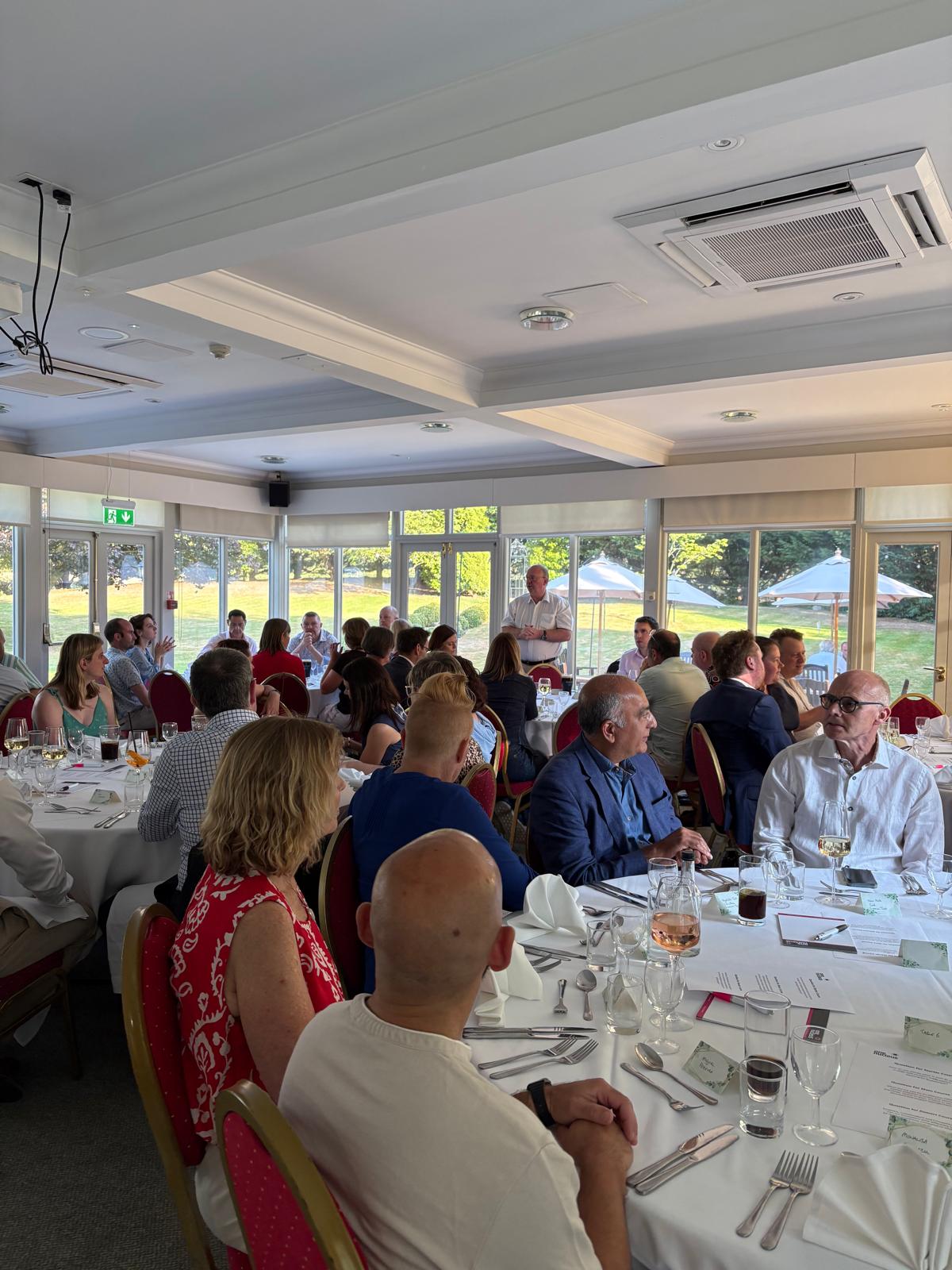
On the eve of both the One Nucleus ON Helix conference and publication by the UK Government of their Life Science Sector Plan: Year One Update report, One Nucleus held a working dinner with sixty guests to discuss ‘Working with CROs and CDMOs to Maximise Biotech Company Value Creation”. The dinners are an opportunity for open sharing of best practice insights between peers and debate around how the sector can collectively drive increased competitiveness and success in operational reality against the backdrop of the UK Life Sciences Sector Plan related policies and aspirations.
The above highlights being evidenced by data showing examples of large investment commitments by Pharma, the publication of the dedicated jobs plan, reduced clinical trial set-up times and more. There are a plethora of updates and details in the Year One Report above, which was warmly welcomed by the National Trade Associations (BIA, ABPI, and ABHI) and industry leaders alike, illustrating progress against the published targets. The highlights emphasised by the authors in the accompanying press release were:
- Life Sciences sector attracts more than £3 billion in new public-private investment in just 12 months, reflecting international confidence in the UK’s world-class science, innovation and health ecosystem.
- Patients benefit from new drugs and faster access to life-saving medicines.
- New plan to help unlock the talent to support 66,000 additional roles in Life Sciences in every part of the country by 2035.
Against this backdrop of progress towards a more Pharma-friendly environment in terms of accessing NHS data, clinical trial speed and market access now and in the future remain the current here-and-now challenges of grassroots biotech companies. These challenges include a still constrained and discerning investment landscape demanding increased capital efficiency, increased global competition and high business operation costs. The redundancy rates observed over the past 2 years in the UK drug discovery sector are striking, as discussed in the recent One Nucleus webinar.
The investor-driven shift in focus for those primary UK R&D companies that reach the clinical stage to deploy new investment on outsourced clinical development means there is a corresponding reduced focus on early R&D, and hence, redundancies. Whilst this impacts demand for pre-clinical CRO services procured, additional factors such as those above mean the R&D service providers are also faced with significant competitive issues from international competitors. Little surprise, therefore, redundancies and closures of laboratories are not just limited to primary biotechs but also in the CRO and CDMO spaces.
With the above developments in mind, One Nucleus convened the group to discuss three main themes aligned with how, by working effectively with outsourcing partners, biotechs can increase their capital efficiency in creating value. The discussed questions covered what best practice looks like when selecting and working with external providers and how all stakeholders could make changes to enable greater competitiveness.
Question 1: How do you decide what to plan to outsource to align with investor expectations when pitching for investment?
The context of the question was the need when pitching for investment increasingly relying upon a clear understanding and planned route of execution to realising the potential value creation being pitched to the investor.
Starting from core questions will enable the process:
-
Do we know what we (biotech company leadership team) are looking for from a CRO or CDMO?
-
Do we know what priority our investor has, such as long-term growth vision or focus on early milestones and exit?
Early engagement with the target investors, they are not all the same, to agree on what they consider the critical path to the next value inflection milestone is a good approach.
This resonated with views from the CRO side, expressing an appetite to engage pre-pitching with companies in order to understand the client’s goals and recommending a critical path to present. This approach should be accompanied by having an open mind to the suggestions the provider may have based on their expertise and experience. Taking advantage of such complimentary consultancy to develop plans is a positive.
This critical path would assist a leadership team and make sure it is much better placed to identify which elements of that plan are best done in-house compared to which elements should be outsourced. Retaining and building core expertise and know-how needs to balance with the speed and cost of externalising. Beyond the core expertise in the subject matter and R&D operations, outsourcing to a suitable CRO or CDMO can offer complementary skills, capacity and speed, meeting the capital efficiency approach sought by investors. Be sure to retain control of intellectual property and data so that you don’t compromise your value proposition later. In addition, procuring external services can bring further efficiency in savings on capital expenditure for access to equipment or space. The general consensus coalesced around a theme of ‘If others can do the work better, faster or cheaper than you, then outsource it!
The next step, implementing a provider selection strategy, the suggestions included the following:
-
Be open-minded and flexible about who and where you might outsource to once you are confident in what you seek.
-
Outsource the activities that can get you to our next value inflection point fastest.
-
Don’t overlook the value of community and trusted relationships.
-
Develop your procurement process and timeline.
-
Consider the use of experienced outsourcing consultants to manage the process.
-
Keep your investors in the loop.
Question 2: What are the top tips for an effective CRO and CDMO selection process and working practice?
The question sought to extract from the group insights on what works and what does not based on experiences among the attendees. The shared advice covered:
-
Review the specification from stage 1 above and be clear on the ask of the providers and the process to evaluate the received RFPs/RFIs.
-
Research the provider market and prioritise against their expertise and capability fit with your need.
-
Fully understand the degree of complexity of your project, ensuring you are clear on the balance between highly innovative and handle-turning. If the former, focus much more on the expertise sourced over cost. If the latter, cost and speed become more compelling differentiators.
-
Build your relationships with the CRO and CDMO in question. Community standing, trust, communication style, experience, culture and openness to creative and flexible approaches of working are all aspects that can be assessed by getting to know your potential providers ahead of placing work or any formal approach, by RFI/RFP. It will provide a sense of whether they are a provider you could work with effectively.
-
For sponsors, ensure a thorough due diligence on the prioritised provider/s. Take up references; ask for examples of where they have delivered what you have asked for; take the time and effort to visit their facilities and meet their scientists to discuss the project with those that will be undertaking your project; and research their business viability.
-
For providers, ensure a thorough due diligence on the potential client. Their financial position, take up references, meet their team and build a strong rapport across the project.
-
Create a clear contractual basis for the work, highlighting any flexibility required or offered, such as shared risk options, and then agree to the project specification.
-
Establish a clear chain of command and responsibility to manage the project. It is inevitable that often research projects do not go to plan. Clarity on respective responsibilities, authorities and communication channels to enable efficient and effective decision-making when changes are needed is vital.
-
Size matters! This can be a particularly important factor for the smaller biotech companies. You want to be sure you are getting the required attention, level of staff and priority your project deserves. Transparency on this may be harder to achieve when dealing with a global CRO/CDMO due to the nature of their operations.
-
Manage performance through milestones achieved along the project.
-
Communication is key. Be open and honest to get the best outcomes.
Question 3: Enablers, Collaborators and Competitors: Can our ecosystem work differently to be more competitive compared to other locations?
This final question was posed given there is an urgent need to retain and scale UK-generated innovation in the UK from economic development, employment, real estate and patient benefit perspectives. With the trend in both outsourcing and innovation sourcing by Pharma/investors moving towards China (45% of all R&D dollars in drug discovery last year were spent in China, ref: EY Beyond Borders report), the gauntlet has been laid down to western biopharma clusters to be better, faster and cheaper in what is offered. The group were asked to consider how our ecosystem could rise to the challenge. The group’s discussion was wide-ranging but revealed a number of suggestions for change that the sector may like to consider adopting.
It was raised early in the discussion whether the UK is able to demonstrate the same level of cohesiveness across government, industry and academia when it comes to delivering a high-quality value proposition seen elsewhere. There were comparisons to other locations such as Belgium and France, where there seems to be greater alignment behind a shared vision for their biopharma industry that connects from the top policymakers and influencers right down to the grassroots of the sector. Whether this is inherent cultural differences, a factor of messaging from the top not permeating to grassroots, disconnected engagement or indeed simply a combination of factors such as these was unclear.
The opportunity, and perhaps necessity, for the providers to share risk with the potential clients in order to generate the early data required to secure their seed or series A investment was highlighted. The nature of discovery research has evolved to be multidisciplinary and complex, meaning it is now inevitable that any start-up biotech is going to need to collaborate externally. If a CRO is able to carry risk through trading services for milestone or equity payment, this lends itself to raising the floor of the value proposition being presented to investors or R&D partners. This in turn would increase the likelihood of a deal and retaining the capacity in the UK ecosystem to undertake such projects. That capacity then being a basis on which to attract fee-for-service contracts from within the UK and from international markets to help the CROs scale further.
Greater collaboration between CROs, each bringing their unique and proprietary offering to the table, would also help reduce the barriers to doing business with UK CROs. This is far from unheard of and there are many examples where CROs work together, cross-refer and participate in joint funding bids for grants, for example, but could this be scaled through some form of cooperative process? This could increase competitiveness through collaboration rather than competition. A stronger together mentality for the UK R&D Services sector.
In terms of other private sector stakeholders. There was felt to be a role potentially for the lab providers in helping to solve some of the challenges through also sharing the risk. Accepting that a number of constituents in the real estate sector carry risk already when building before leasing. Rather than seeing unoccupied laboratories, there may be merits in helping both biotechs and lab-based CRO providers reduce their operating costs with tapered, deferred or at-risk leasing structures. In terms of the role venture investors could play, there was credit given to the British Growth Fund as an example of supporting a CRO to grow and exit. Perhaps with a risk-sharing appetite in a pre-clinical CRO, more investors may be tempted to follow.
The matter of government support arose with passion. There was a very strong sense from the group that anything that reduced the cost of doing business in the UK was a positive. Actions such as reversing the increase in National Insurance Contributions, addressing energy costs and supporting talent development to keep pace with the changing nature of R&D, including upskilling of current or redundant R&D staff, would all be welcome. Much of the lobbying for this is reportedly influencing policy-making in areas such as these in the route map related to the framework set out in the UK Life Science Sector Plan referenced earlier, yet there feels a lack of urgency whilst the drug discovery sector in the UK suffers perhaps an existential crisis. Examples of better support mechanisms to support job creation, international business development and infrastructure access that are present elsewhere suggested the UK can learn from others’ blueprints. There was discussion around the relative attractiveness of incentive programmes such as R&D Tax Credits. An anecdotal example shared was a UK biotech looking to outsource to a programme. The company took an open mind into the procurement process in terms of which geography the best fit provider may be located in. A thorough selection process and price comparison revealed such a large cost differential when comparing UK to an alternative location it rendered any R&D Tax Credit impact negligible when it came to making a decision.
Success in international business development, whether winning CRO and CDMO contracts or encouraging more primary R&D companies to locate in the UK to access the excellence of the academic, partnering or services available, would indirectly create the working capital in CROs that would facilitate risk-sharing, require recruitment of scientists and grow lab occupancy. Resourcing international business development can be costly for fast-growing CROs and be deemed too risky until there is a strong sense of a viable market for their service or even secured contracts to build upon. Government support by way of grants or tax breaks to offset the costs of commercial hires until deal flow is secured would reduce the barriers to this. A biopharma-tailored UK Export Finance support mechanism may be some way to a solution.
No matter who the target buyer may be, effective selling requires differentiation of the offer. A simple question was posed by one of the guests: ‘What is the UK Life Sciences USP?’ There was general agreement that the UK strength has been the high-quality innovation, but there is a need to translate that generic phrasing into a well-communicated and evidenced set of standout specifics. This is true for individual providers who need to be clear on their USPs to win clients. The UK, whilst renowned for its world-class research and innovation across Life Sciences and, indeed, a wide array of deep tech sectors, perhaps more attention needs to be paid to developing a strong USP around key attributes such that potential inward investors, irrespective of cost, speed, or incentives feel they should at the very least proactively explore the UK as a location for that work. As described in the recent paper published by PM Life Sciences Consultancy and referenced at the dinner, the UK and all its Life Science stakeholders need to be ambitious and retain the generated innovation further through development and commercialisation.
Conclusions and Calls to Action:
The evening was a dynamic and open discussion. It was clear the energy brought to the discussion was generated by a truly collective desire to make things work better. Input from all participants was constructive, largely positive that actions to improve the situation are feasible, and a strong sense of purpose emanated from the room. It left a sense of some helpful calls to action as follows:
-
Increased Risk-Sharing
There should be a focus, perhaps incentivised by the Government through grants, tax breaks, loans or other measures, to increase the level of risk-sharing between stakeholders in the UK sector in order to lift the innovation floor to a level where commercial investors and corporate partners feel de-risking has been effective. CROs working with pre-seed drug discovery companies to generate key data to present to investors whilst housed in reduced rental rate and currently unoccupied laboratories.
The Ask – Primary R&D companies, CROs and landlords to explore shared-risk project undertaking.
-
Reduction to Business Operating Costs
A call here to the Government to continue reviewing how reversing or exemptions from NICs for small IP-rich Life Science companies could be implemented to increase the competitiveness of UK CROs and CDMOs when bidding for contracts and extending the cash runway of the primary R&D companies seeking maximum cash efficiency.
The Ask – UK Government to take all measures possible to reduce operating costs for UK SMEs.
-
Government Support of Commercial Teams
The UK has a plethora of IP-rich CROs and CDMOs that have high potential to scale in the UK, but such scaling is dependent on winning more contracts. As offered by governments elsewhere, tax breaks or other instruments could support CROs in upscaling their business development teams. This may be a new hire or a career development opportunity for an existing employee seeking to develop into a new role. Greater business development capability leading to greater deal flows and greater scientific and technical staff recruitment in the UK.
The Ask – UK Government (or Regional Authorities) to Introduce a Grant Scheme to Incentivise New Commercial Hires.
-
Clear UK USPs for Promotion Overseas
The travelling UK Life Science executives, irrespective of the type or size of company they operate in, hold the potential to be an enormous, motivated and expert UK sales force. Constantly meeting or advising prospective clients, partners or international economic development teams, this travelling cohort of UK champions can be effective marketing channels disseminating the top USPs and support mechanisms the UK has to offer potential inward investors. Providing this group with accessible and brief information enables their support of UK plc.
The Ask – UK Government or National Trade Associations to create a clear set of top UK USPs.
-
Greater CRO/CDMO Collaboration to Strengthen the Value Proposition and Accessibility
There were numerous mentions of the importance of trust, relationship building, communication and visibility of the CRO and CDMO strengths. To enable such mapping and collaboration, the challenge laid down to each R&D services provider is to crystallise their USPs into one simple statement that immediately conveys their area of deep expertise and proprietary technology. Armed with such collated information, referral portals such as One Nucleus would be equipped to promote, refer and champion those USPs to an international audience as a trusted preferred supplier network offering a one-stop channel to multiple USP providers. Furthermore, such a resource when disseminated would enable much greater cross-referral and collaboration within the ecosystem.
The Ask – CROs and CDMOs to refine and submit their short USP statements to One Nucleus to begin such a collation exercise.
A note of thanks:
One Nucleus is grateful for the support of the table sponsors for the evening, Thermo Fisher, Gallagher and ACM Global, along with that of the participants. Whilst One Nucleus feels such forums are valuable to supporting the success of our ecosystem and able to absorb the indirect costs, the direct venue costs of the dinner and drinks are covered by the group. A collaboration that enables One Nucleus to bring the best support we can at the minimum overhead to our sector.