by Philippa Clark, Director of Business Development, One Nucleus
Spend any time around fundraising and you'll quickly notice how much attention is given to the pitch. Founders are encouraged to refine their story, perfect their deck and rehearse their delivery. It's sensible advice, but I increasingly find myself questioning whether we place too much emphasis on the moment an investor enters the room and not enough on everything that happens beforehand.
Because whilst investment may progress with a pitch, it rarely starts or finishes there.
Over the years, I've had the privilege of working alongside founders, investors, advisors and partners across the life sciences ecosystem. If there's one consistent pattern I've observed, it's that the companies attracting attention are rarely those that simply appear when they need funding. More often, they are the ones that have spent time building relationships, contributing to their community and establishing credibility long before fundraising becomes a priority.
Yet despite this, much of the advice given to founders still focuses heavily on the pitch itself, rather than the relationship-building that often determines whether that pitch happens in the first place.
Of course, a strong pitch matters. Investors need a compelling vision, a clear strategy and confidence in a team's ability to execute. But in a sector characterised by long timelines, technical complexity and significant risk, investment decisions are rarely based on slides alone. Investors are looking for confidence and confidence is often built through trusted conversations, recommendations and relationships that have developed over time.
Time and again, I've seen opportunities gain momentum through conversations that started months before a fundraising process formally began.
That raises an interesting question - Have we become too focused on pitching and not focused enough on building the networks that make pitching possible?
Trust: The Most Overlooked Currency in Fundraising
Life sciences has always been a relationship-driven sector, but I would argue that trust has become even more valuable in today's fundraising environment.
Having spent much of my career connecting people across the ecosystem, I've lost count of the number of times a seemingly informal introduction has gone on to create meaningful partnerships, investment discussions or entirely new opportunities. What often starts as a conversation between two people can have a ripple effect that extends far beyond its original purpose.
Early investors are being asked to assess increasingly complex opportunities whilst navigating a more selective market. They cannot be experts in every scientific field, platform technology or therapeutic area. As a result, they look beyond the company itself and seek validation from people and networks they trust.
They talk to experienced founders, scientific experts and seek opinions from colleagues and co-investors. They ask who else is backing a company, talking about a company or paying attention to a company. In other words, they build conviction through their network.
This is not about exclusivity or closed circles. It's simply how people make high-stakes decisions. The higher the risk, the more important trusted reference points become.
Yet many founders still approach fundraising as a largely transactional process. Build a list, send outreach emails, secure meetings, then deliver the pitch.
There is nothing inherently wrong with that approach, but it can overlook a fundamental reality: whilst data can identify potential investors, it cannot create trust.
We now have access to more fundraising intelligence than at any point in the sector's history. We can filter investors by stage, geography, cheque size and investment focus. One Nucleus One-ON-One sessions are designed to help members do just that. That's incredibly valuable. But despite having better data than ever before, many companies would argue that fundraising has become harder, not easier.
Perhaps that's because information and access are not the same thing.
Knowing who you should speak to is important and having someone credible help you start that conversation is often what makes the difference.
Why Clusters Continue to Outperform
This is also why life science clusters remain such powerful engines of innovation and investment.
When discussions turn to clusters, we often focus on physical assets: the universities, research institutes, lab space and infrastructure. All of these are important. But I believe one of the greatest strengths of a successful cluster is something much harder to measure: Connection.
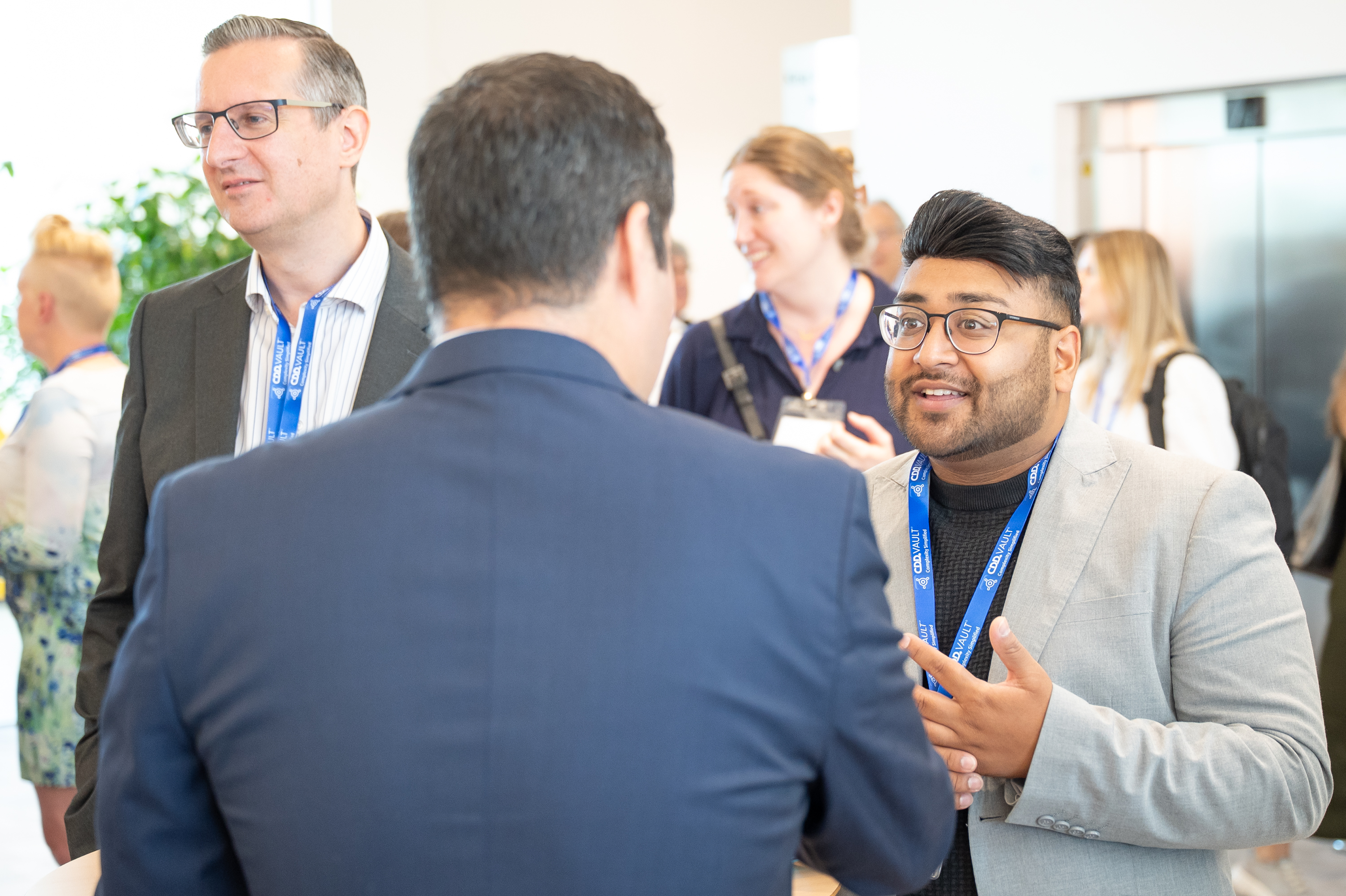
The best clusters create repeated opportunities for people to interact, collaborate and build relationships over time. They bring entrepreneurs, investors, scientists and industry partners into proximity with one another, creating an environment where trust develops naturally.
A single meeting rarely changes everything. More often, opportunities emerge through a series of interactions that build familiarity, trust and ultimately confidence.
This is one of the reasons why established life science communities continue to generate new companies, attract capital and create growth. Strong networks accelerate the transfer of knowledge, expertise, reputation and trust.
The value of a cluster isn't simply who is located there, but how connected they are.
The Problem with Transactional Networking
I've written previously about the importance of taking a long-term approach to networking, and I believe that message is more relevant than ever.
Too often, networking becomes something people do when they need something, whether that’s investment, a partner, advice or introductions.
By that point, they're already trying to draw value from relationships that may not yet exist.
The strongest networks are rarely transactional, they’re built through contribution, consistency and trust.
People who consistently create opportunities for themselves are often the same people creating opportunities for others. They make introductions without expecting anything in return. They share insights and promote others. They support their wider community because they recognise that ecosystems thrive when knowledge and connections flow freely.
What makes these individuals effective is not the size of their network but the strength of the trust within it, which does take time.
You cannot build it in the weeks before a fundraising round. You build it through consistent actions, genuine relationships and a willingness to contribute when there is no obvious transaction attached.
Ironically, those who invest in their network long before they need it are often the people who find opportunities coming back to them when the time is right.
Building Network Readiness Alongside Investment Readiness
This is why I believe we need to broaden our definition of investment readiness.
When founders prepare for fundraising, the conversation quite rightly focuses on strategy, financials and market opportunity.
Perhaps though we should spend just as much time talking about network readiness.
Who truly understands your vision? Who would advocate for your company when you're not in the room? Who would willingly introduce you to an investor, partner or advisor? Who has confidence in your ability to deliver?
These questions are harder to answer than questions about valuation or fundraising targets, but they may be equally important.
Programmes such as the One Nucleus Going for Gold are valuable not simply because they help companies prepare for investment conversations, but because they encourage engagement with the wider ecosystem. They create opportunities to raise visibility, build credibility and develop relationships that can support growth long after a fundraising round has closed.
Ultimately, even the most compelling science is judged through the lens of the team responsible for translating it into impact.
The Real Starting Point
The longer I spend working in this sector, the more convinced I become that whilst the pitch matters, it is rarely where investment is won. By the time a founder walks into the room, relationships have been built, trust has been earned and credibility has already started to take shape.
The strongest companies understand this. They don't view networking as a fundraising tactic or a box-ticking exercise. They see it as a long-term business strategy and a core part of building a successful company.
In life sciences, investment is seldom the result of a single presentation. More often, it reflects months or years of conversations, connections and contributions that create the confidence needed to invest.
Ultimately, groundbreaking science may open the door, but it is confidence in the people behind it that often secures investment.